Can You Eat Ultra-Processed Foods and Still Eat Healthy?
Can you eat ultra-processed foods and still eat healthy? Learn how to read labels, plan balanced meals, and improve food patterns without all-or-nothing rules.
Can you eat ultra-processed foods and still eat healthy? For most people, the useful answer is not a simple yes or no. A packaged food can be convenient, affordable, shelf-stable, and compatible with a balanced eating pattern. At the same time, a routine built mostly around highly processed products may make it harder to get enough fiber, protein, produce, and other nutrients while staying within your energy needs. The better question is how the food fits into the complete pattern.
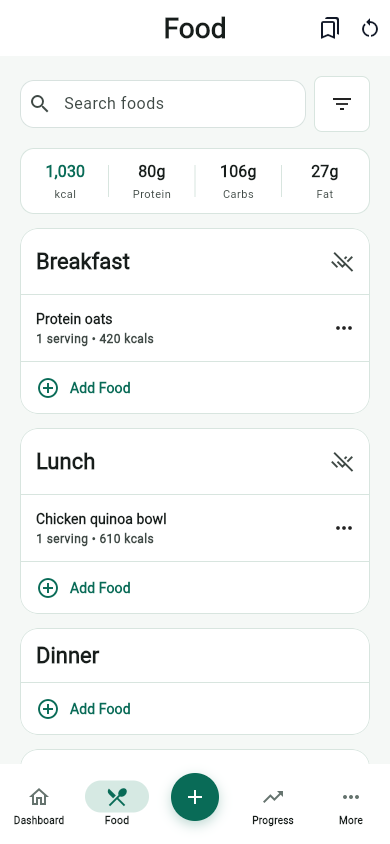
MyFitLife answers by moving the conversation away from food guilt and toward measurable decisions. Log what you actually eat, verify the serving size, review the nutrients that matter for your goal, and look at repeated patterns across the week. The app is a general wellness tool. It does not diagnose disease, determine whether a food is medically appropriate, or predict an individual glucose response.
What does ultra-processed actually mean?
Ultra-processed food is commonly discussed using the NOVA classification system, which groups foods according to the degree and purpose of industrial processing. The category generally refers to industrial formulations made from extracted or modified ingredients and designed for convenience, palatability, or long shelf life. Examples can include some packaged snack foods, sweetened drinks, confectionery, ready-to-eat meals, and reconstituted meat products, although the classification depends on the specific product and formulation.
Processing level and nutritional quality are related but not identical. Frozen vegetables, canned beans, pasteurized milk, whole-grain bread, yogurt, tofu, and canned fish are all processed in some way. Processing can improve safety, storage, cost, or convenience. The word ultra-processed is therefore a useful prompt to inspect a food, not a complete nutritional verdict.
Research reviews have reported associations between higher intake of ultra-processed foods and several health outcomes. Much of this evidence comes from observational studies, which can identify patterns but cannot prove that every ultra-processed product causes the same outcome or that processing alone is the only explanation. Diet quality, total intake, activity, socioeconomic factors, sleep, and other behaviors can also influence results. Use the evidence to improve your pattern, not to label one food as dangerous by default.
Why a food category is not enough to make the decision
A category-level label does not tell you how much of the food you ate, what it replaced, or what the rest of the meal contained. A packaged protein-rich snack may solve a travel problem. A frozen meal may be more practical than skipping lunch. A sweetened cereal may be part of a breakfast that also includes yogurt and fruit. Conversely, a product marketed as healthy may still be low in fiber, high in added sugar, or easy to overeat because the package contains multiple servings.
Context creates the useful comparison. Ask what job the food is doing, which nutrients it contributes, what nutrients are missing, and whether a simple addition would make the meal more complete. A convenience food can often work better when paired with a protein source, fruit or vegetables, water, or another high-fiber food. The goal is not to make every meal minimally processed. The goal is to make the overall pattern more nutrient-dense and repeatable.
Use the Nutrition Facts label as a decision tool
The Nutrition Facts label gives you a more actionable view than the front of a package. Start at the top. Check the serving size and the number of servings per container before interpreting calories or nutrient amounts. The listed numbers usually describe one serving, not necessarily the amount you will eat. If you eat two servings, calories and nutrient amounts generally double.
Next, compare the nutrients that connect to your current goal. For many everyday decisions, that includes calories, protein, dietary fiber, sodium, saturated fat, and added sugars. The FDA describes 5% of the Daily Value as low and 20% as high as a general guide. These are comparison tools, not personal prescriptions. Your needs may differ based on age, activity, preferences, health context, and professional guidance.
- Check servings per container and compare the label with the portion you expect to eat.
- Look for protein and fiber when you need a meal or snack that is more filling and substantial.
- Compare added sugars separately from total sugars because total sugars can include naturally occurring sugars in fruit and milk.
- Review sodium and saturated fat when comparing similar packaged meals or snacks.
- Use the ingredient list to understand the product, but do not assume that a long ingredient list alone proves a food is unhealthy.
- Compare similar products using the same serving size so the numbers are meaningful.
Build the meal around what the packaged food is missing
A useful meal does not need to be perfect at the package level. It needs to work as a complete eating opportunity. If a ready-to-eat meal is low in protein, add a practical protein anchor such as beans, eggs, yogurt, tofu, fish, chicken, or another option that fits your preferences. If it is low in fiber or produce, add fruit, vegetables, beans, lentils, oats, or whole grains. If the meal is high in sodium, choose lower-sodium foods elsewhere that day without treating one meal as a failure.
- Pair a packaged snack with fruit, yogurt, nuts, or another food that adds staying power.
- Add frozen or canned vegetables to a convenience meal when fresh produce is not realistic.
- Use a prepared sauce or seasoning for flavor while keeping the portion visible in the log.
- Choose the package size that matches the amount you intend to eat when possible.
- Keep a few reliable combinations in rotation so convenience does not depend on impulse decisions.
How MyFitLife makes the pattern visible
MyFitLife helps turn a broad nutrition question into a sequence of small checks. Use food search, barcode scanning, photo logging, or manual entry to record the food. Then review the serving size and adjust the portion so the entry represents what you ate. When nutrition data is available, inspect calories, protein, carbohydrates, fat, fiber, sodium, and added sugars together rather than allowing one front-of-package claim to decide the meal.
MyFit Score can provide a quick comparison layer when several foods could fill the same role. Treat it as contextual guidance, not a health grade or a replacement for the label. A food with a stronger score may still fail to solve the need in front of you, while a lower-scoring convenience food may be useful on a busy day. The best decision is the one that fits the meal, the portion, your preferences, and the rest of the day.
After logging, save combinations that work. Saved meals reduce repeated data entry and make it easier to notice which packaged foods are genuinely useful and which ones leave you hungry, short on protein, or difficult to fit into your targets. Review the pattern across several days instead of judging one snack or one restaurant meal in isolation.
Make convenience part of your grocery strategy
Convenience is a design constraint. A plan that assumes unlimited time will break when work, travel, caregiving, or fatigue changes the schedule. Use Pantry and Grocery to keep practical foods available before the busy moment arrives. Combine a few prepared items with simple ingredients that add protein, produce, fiber, or flavor.
- Choose two or three packaged foods that solve real schedule problems.
- Identify the nutrient or meal component each food does not provide well.
- Add complementary foods to your grocery list before the week begins.
- Log the serving sizes for your usual combinations and save the meals worth repeating.
- Review the week and replace only the choices that consistently create friction.
Avoid the all-or-nothing version of healthy eating
The practical alternative to a highly processed diet is not necessarily a rule that every food must be fresh, organic, homemade, or free of packaged ingredients. All-or-nothing rules can make normal life harder and can encourage people to hide or skip entries when they eat something outside the plan. A more durable approach is to increase the frequency of nutrient-dense choices while keeping room for convenience and enjoyment.
That may mean improving breakfast before changing dinner, adding one fruit or vegetable to a familiar lunch, choosing a higher-fiber version of a staple, or replacing a sugary drink with water on most days. Small changes become more informative when you can see them in the log and repeat them consistently.
The MyFitLife answer
Yes, you can eat some ultra-processed foods and still build a healthy eating pattern. The answer depends on the total pattern, the portion, the product nutrient profile, and what the food contributes to the meal. MyFitLife supports that process by making food intake, serving sizes, nutrition details, MyFit Score, saved meals, Pantry, Grocery, and weekly progress easier to review together. Use the app to make better-informed general wellness decisions, keep your routine realistic, and identify the next useful improvement without turning food into a moral judgment.
Sources and further reading
- Dietary Guidelines for Americans, 2025-2030 U.S. Department of Health and Human Services and USDA
- Tips for Healthy Eating for a Healthy Weight Centers for Disease Control and Prevention
- How to Understand and Use the Nutrition Facts Label U.S. Food and Drug Administration
- Serving Size on the Nutrition Facts Label U.S. Food and Drug Administration
- FoodData Central U.S. Department of Agriculture
- Ultra-processed food exposure and adverse health outcomes: umbrella review of epidemiological meta-analyses The BMJ / PubMed Central
- Effect of Ultra-Processed Foods Consumption on Human Health Outcomes: An Umbrella Review of Systematic Reviews and Meta-Analyses Nutrition Reviews / PubMed
Related articles
- How Can You Eat Healthy and Still Enjoy Food?
- What Does the New 2025–2030 Food Pyramid Mean for Your Daily Food Log?
- Do Front-of-Package Nutrition Labels Make Food Choices Easier?
Install free. Keep the core tracker free.
Log food, scan barcodes, track macros, and review progress without starting a subscription.