How Does Tracking Meals Help With Weight and Glucose Management?
How meal logging connects calories, carbohydrates, protein, timing, symptoms, and glucose patterns for better weight and blood sugar conversations.
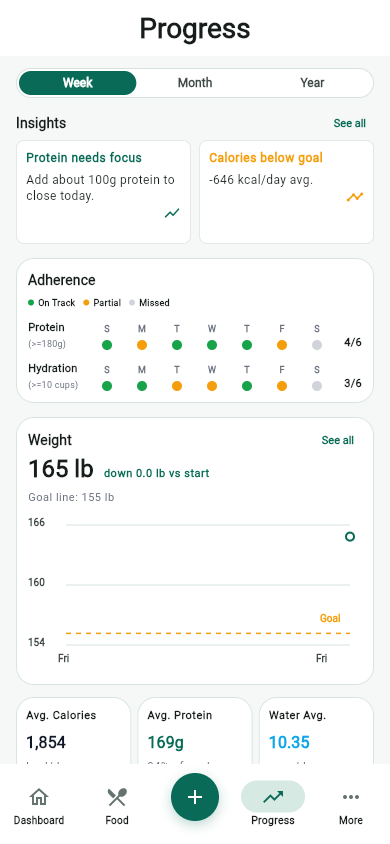
Meal tracking helps because memory is not a reliable nutrition database. Most people remember the main meal and forget the bites, beverages, portions, timing, sauces, second servings, and snacks that explain why weight or glucose patterns changed. Logging turns those invisible details into usable signals.
The key question is not whether tracking makes people perfect. It does not. The question is whether tracking gives enough clarity to make the next adjustment smaller and smarter. For weight management, that usually means calories, protein, portions, and consistency. For glucose management, it often means carbohydrate amount, meal timing, medication context, activity, and patterns around high or low readings.
Weight management needs a pattern, not a guess
Body weight changes over time based on many inputs, including energy intake, activity, sleep, stress, medications, and fluid shifts. A meal log does not explain everything, but it gives you the part of the system you can observe daily. That makes it easier to spot whether the plan is too aggressive, too loose, or simply inconsistent.
In MyFitLife, useful weight-management signals include logged calories, protein consistency, hydration, meal timing, repeat meals, grocery readiness, and progress trends. The point is to find the next high-leverage change, not to judge every entry.
Glucose management needs timing and carbohydrate context
For people managing diabetes or prediabetes, meals are connected to blood glucose because carbohydrates break down into glucose and because meal composition, medication timing, physical activity, illness, sleep, and stress can all affect readings. Meal tracking gives the glucose number a story.
A log is especially useful when it captures what was eaten, roughly when it was eaten, the portion, the carbohydrate source, and what happened afterward. If you use a glucose meter or continuous glucose monitor, do not treat MyFitLife as a medical device. Use it as a companion record that can help you and your care team discuss patterns.
Track the details that explain decisions
- Portion size, because labels and restaurant servings rarely match memory.
- Protein, because it helps structure meals and can affect fullness.
- Carbohydrate foods, because they are central to glucose pattern review.
- Fiber-rich foods, because they change meal quality and satisfaction.
- Hydration, because it often drops when routines get busy.
- Timing, because late meals, skipped meals, and long gaps can change hunger and glucose patterns.
Use tracking to reduce noise
Without a log, a higher glucose reading or a stalled weight trend can trigger overcorrection. With a log, the question becomes more specific. Was dinner later? Was the portion larger? Was protein low earlier? Did a sugary drink appear? Did a planned snack prevent a low? Did takeout bring more sodium and temporary water weight?
That specificity matters. It lets you adjust one variable at a time. You might move more protein earlier, swap a beverage, pre-plan a higher-fiber lunch, split a large dinner, or bring glucose notes to a clinician before changing medications.
Understand the glucose timeline
A single glucose reading is easier to interpret when it is connected to the meal timeline. Carbohydrate type and amount, protein, fat, fiber, activity, medication timing, stress, sleep, and illness can all influence what happens after eating. A meal log gives you the surrounding context so you can ask better questions instead of blaming one food automatically.
For example, a higher post-meal reading after a low-fiber, low-protein lunch tells a different story than a higher reading after a balanced meal eaten during illness or poor sleep. A low reading after exercise and a delayed meal is different from a low reading after taking medication without enough carbohydrate. The pattern is the useful unit.
Improve data quality without making tracking harder
Not every entry needs laboratory precision. Use higher precision when it changes the decision: packaged foods with labels, calorie-dense fats and sauces, restaurant items with published nutrition, carbohydrate portions for diabetes planning, and foods you eat often. Use faster estimates for low-stakes foods or one-off meals where the exact number will not change the next step.
This keeps tracking sustainable. The goal is enough accuracy to see patterns, not a perfect archive of every bite. If logging starts to feel obsessive, punitive, or connected to disordered eating behaviors, reduce the detail and involve a qualified professional.
Make the log easier than the problem
Tracking only works if it is easy enough to repeat. MyFitLife gives you multiple entry paths because different meals need different tools: barcode scanning for packaged foods, search for common items, recent foods for repeats, manual entry for rough estimates, photo-assisted logging for busy moments, and saved meals for defaults.
- Log the meal close to when it happens.
- Confirm the serving size when the food has a label.
- Save meals that repeat more than twice.
- Use Grocery and Pantry to make the better default easier next time.
- Review weekly trends before making major changes.
When to involve a professional
If you have diabetes, use insulin, take medications that can cause hypoglycemia, are pregnant, have kidney disease, have a history of eating disorders, or are seeing repeated high or low glucose readings, use professional guidance. A detailed meal and glucose-adjacent log can make that conversation more useful, but it should not replace care.
The MyFitLife answer
Meal tracking helps weight and glucose management by turning meals into patterns. MyFitLife connects the practical pieces: calories, protein, carbs, fats, hydration, MyFit Score, meal timing, saved meals, grocery planning, and progress history. The result is not a perfect day. It is a clearer next decision and a better record for the people helping you manage your health.
Sources and further reading
- Game Plan to Prevent Type 2 Diabetes National Institute of Diabetes and Digestive and Kidney Diseases
- Weight Management and Healthy Living Tips National Institute of Diabetes and Digestive and Kidney Diseases
- Steps for Losing Weight Centers for Disease Control and Prevention
- Diabetes Meal Planning Centers for Disease Control and Prevention
- Meal Planning American Diabetes Association
- Checking Your Blood Glucose American Diabetes Association
- Use CGM for Better Diabetes Management American Diabetes Association
Related articles
- Best Food Logging App for Weight Loss: What to Look For
- Should You Judge Weight Loss by One Weigh-In or a Trend?
- Can a Calorie Tracker Show Which Foods Drove Your Calories and Macros?
Install free. Keep the core tracker free.
Log food, scan barcodes, track macros, and review progress without starting a subscription.