Is Creatine Worth Taking—and What Should You Track If You Use It?
Review what creatine evidence can and cannot tell you, how to identify the exact supplement label, and what to track without confusing adherence with effectiveness.
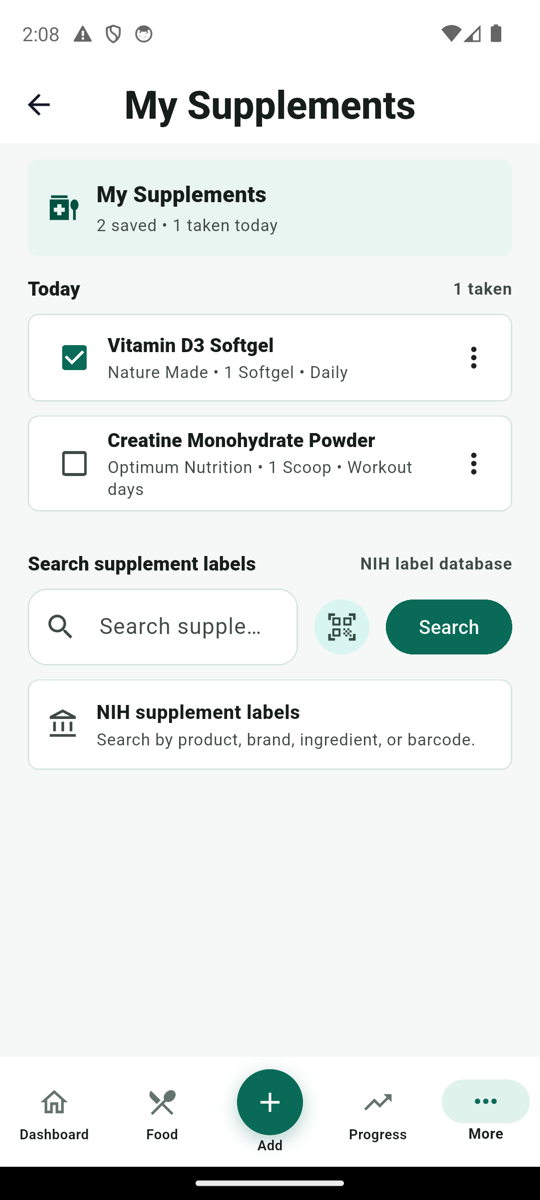
Is creatine worth taking? The evidence-based answer is: it depends on the outcome you want, the training you actually do, your health context, and the exact product in your hand. Creatine monohydrate has substantial research behind its role in repeated high-intensity exercise and resistance-training outcomes, but that does not make it necessary, effective for every goal, or appropriate for every person. If you use it, track the exact label, when you take it, training consistency, body-weight trends, relevant performance measures, symptoms, and clinician-requested laboratory context. Do not treat a checked box as proof that the supplement worked.
This article does not prescribe a creatine dose or tell you to start a supplement. Dietary supplements can interact with medications, affect laboratory interpretation, contain multiple ingredients, or be inappropriate with certain medical conditions. The safest decision may be not to take one. A qualified healthcare professional who knows your history can help decide whether the evidence applies to you and whether monitoring is needed.
What creatine does in the body
Creatine is made in the body and also obtained from foods. In muscle, creatine can be stored as phosphocreatine. That system helps regenerate adenosine triphosphate, or ATP, during short periods of high energy demand. The mechanism is one reason research often focuses on repeated bouts of intense activity—such as resistance exercise or sprint-like efforts—rather than assuming the same effect for every type of movement or health outcome.
A plausible mechanism is not enough to prove a practical benefit. The important questions are whether controlled studies measured the outcome you care about, whether the participants resemble you, whether creatine was combined with a defined training program, how long the studies ran, and how consistently the result appeared. Ingredient evidence also does not automatically validate the claims printed on a particular branded product.
What the exercise evidence supports—and what it does not
The NIH Office of Dietary Supplements describes creatine as one of the most thoroughly studied performance-supplement ingredients and explains that it may improve capacity for certain high-intensity activities. Meta-analyses of controlled studies have reported additional strength or lean-mass gains when creatine was combined with resistance training in defined adult populations. That is evidence for a conditional effect: supplement plus training, measured outcomes, specific study groups, and limited study periods.
It is not evidence that every user will notice a benefit, that creatine replaces progressive training or adequate nutrition, or that a larger serving produces a better outcome. Study populations have often been weighted toward healthy adults and, in many areas of performance research, toward men. Results for one age group, sex, training status, sport, or clinical population should not be generalized without checking the evidence for the group in question.
Define worth before judging it. If the intended outcome is a measurable change in repeated lifting performance, the tracking plan should include a consistent training metric. If the intended outcome is vague—more energy, better recovery, general wellness—it becomes much easier to attribute normal variation to the supplement. A supplement cannot be evaluated cleanly when the outcome was never specified.
Use an evidence-label-adherence-outcome framework
Most supplement decisions collapse several different questions into one. Separating them prevents a common reasoning error: assuming that research on an ingredient proves a product works, and that taking the product proves it caused an observed change.
- Evidence: What outcome was studied, in which population, alongside what training or nutrition conditions, for how long, and with what limitations?
- Label: What exact product, ingredient form, serving definition, other ingredients, warnings, and lot information are printed on the package?
- Product quality: Does the product have meaningful independent certification when that matters, and is the label current rather than an old or similar formulation?
- Adherence: Was the supplement actually taken as planned, and were missed or uncertain days recorded without guessing?
- Outcome: Did a predefined measure change over an adequate period, and could training, sleep, diet, hydration, illness, or normal variation explain the change?
These layers answer different questions. The research evidence concerns an ingredient under study conditions. The label describes what a seller says is in one product. Quality evidence concerns identity, contamination, and manufacturing—not whether the ingredient will help you. Adherence describes behavior. Outcome tracking describes what happened. None of those layers can substitute for all the others.
Why the exact supplement label matters
Creatine appears in single-ingredient powders and in multi-ingredient pre-workout or performance products. Two packages with creatine on the front may differ in ingredient form, amount per serving, serving scoop, stimulants, sweeteners, proprietary blends, allergens, warnings, and suggested use. If the product changes, the exposure changes, even if the habit is still called taking creatine.
The NIH Dietary Supplement Label Database catalogs information printed on labels of products sold in the United States, including label images, ingredient names and forms, amounts, and statements. It contains both on-market and off-market labels and relies partly on voluntary submissions, so finding a label does not prove that the product is current, independently tested, safe, effective, or endorsed by NIH. Match the brand, product name, formulation, label image, and serving details to the physical container.
The FDA does not approve dietary supplements for safety and effectiveness before they are sold. Manufacturers are responsible for meeting applicable safety and labeling requirements, while FDA oversight includes inspections, label review, adverse-event monitoring, and action against unsafe or noncompliant products. That regulatory structure is why an official-looking Supplement Facts panel should be read carefully but never treated as premarket proof of benefit or safety.
What to track before and during use
A useful record begins before the first taken entry. Write down the question you are trying to answer, the measure that represents success, and the factors likely to confound it. Baseline information does not need to be elaborate, but it should be collected consistently enough to compare with later data.
- Product identity: exact name, manufacturer, ingredient form, serving definition, other ingredients, warnings, lot or expiration details when relevant, and the matched DSLD label.
- Adherence: whether it was taken on a given day, without filling missing days from memory.
- Training exposure: exercise type, sets, repetitions, load, effort, rest, and program changes that could explain performance.
- Performance outcome: a small set of repeatable measures, such as completed repetitions at a consistent load, rather than a different workout every day.
- Body-weight trend: measurements taken under reasonably consistent conditions, interpreted as a trend rather than a verdict from one morning.
- Nutrition and hydration context: overall food intake, protein pattern, hydration, and large routine changes that make before-and-after comparisons difficult.
- Symptoms or adverse events: new gastrointestinal symptoms, swelling, cramping, dizziness, allergic symptoms, or any concern that warrants stopping and seeking professional advice.
- Clinical context: medications, diagnoses, and laboratory tests your clinician wants documented, including that you are using creatine.
Do not confuse body weight with body fat
Creatine use can be accompanied by changes in water retention and total body weight. A faster scale increase therefore does not establish new body fat, and it does not by itself prove new muscle tissue. Day-to-day weight also changes with hydration, carbohydrate intake, sodium, digestive contents, menstrual cycle, and measurement conditions. Use repeated measurements under similar conditions and interpret them alongside training and nutrition data.
This matters when someone abandons a well-designed plan because of one scale reading or celebrates a short-term change as guaranteed muscle gain. Progress data is descriptive. Body-composition conclusions require an appropriate method, adequate time, and an understanding of measurement error.
Creatine, kidneys, and laboratory interpretation
Creatine and creatinine are related compounds, and supplemental creatine can complicate interpretation of serum creatinine, a common input in estimated kidney-function calculations. A 2026 systematic review of randomized trials reported a small increase in serum creatinine without statistically significant differences in urea or estimated glomerular filtration rate, while also calling for longer randomized trials beyond one year. That finding does not establish safety for every person, every product, every health condition, or indefinite use.
Tell the clinician ordering laboratory work exactly what you take rather than stopping, starting, or changing a supplement to manipulate a result. People with known or possible kidney disease, abnormal kidney-related labs, dehydration risk, complex medication regimens, or other relevant conditions need individualized guidance before use. An app cannot determine whether a lab change is benign, supplement-related, or evidence of disease.
Know when to pause and get professional help
Talk with a physician, registered dietitian, pharmacist, or qualified sports-medicine professional before starting when you have a medical condition, take prescription or over-the-counter medication, are pregnant or breastfeeding, are under 18, have a history of adverse supplement reactions, or compete under anti-doping rules. Product combinations deserve special attention because stimulants and other active ingredients may create risks unrelated to creatine itself.
Stop using the product and seek appropriate medical advice for a suspected adverse reaction. Severe or rapidly worsening symptoms require urgent care. The FDA accepts reports of dietary-supplement adverse events; a tracking record can help identify the exact product and timing, but it is not a substitute for evaluation.
How to decide whether it was worth it
- Restate the original outcome and confirm that it was specific enough to measure.
- Review the saved product and taken log to establish what was actually used and when.
- Compare a consistent baseline period with a meaningful follow-up period rather than selecting the best single day.
- Check training, sleep, nutrition, hydration, illness, and program changes for alternative explanations.
- Evaluate cost, convenience, symptoms, product confidence, and the size of any observed benefit together.
- Discuss uncertain results, adverse effects, or clinical questions with a qualified professional before continuing or changing use.
The MyFitLife answer
MyFitLife does not decide that creatine is worth taking. It helps make supplement use less ambiguous. Search the NIH DSLD label information, match it to the exact container, save the correct supplement, and record when it is taken. Review that adherence record beside food, hydration, body-weight trends, and progress, then compare the timeline with a consistent training record. This creates a clearer view for your own review and for conversations with a clinician.
A saved label is not a quality certification, a taken entry is not evidence of effectiveness, and a progress change is not proof of causation. Creatine may support certain outcomes for some adults under studied conditions, but benefits, risks, and appropriate use are not universal. Use MyFitLife as a general wellness record, follow the physical product label and qualified professional guidance, and never use the app to diagnose kidney function, prescribe a serving, replace medication, or treat a disease.
Sources and further reading
- Dietary Supplements for Exercise and Athletic Performance: Health Professional Fact Sheet NIH Office of Dietary Supplements
- Dietary Supplement Label Database (DSLD) NIH Office of Dietary Supplements
- FDA 101: Dietary Supplements U.S. Food and Drug Administration
- Effects of Creatine Supplementation and Resistance Training on Muscle Strength Gains in Adults Under 50 Years of Age: A Systematic Review and Meta-Analysis Nutrients via PubMed
- The effect of creatine supplementation on kidney function: a systematic review and meta-analysis of randomized controlled trials Journal of Renal Nutrition via PubMed
- Dietary Guidelines for Americans, 2025-2030 U.S. Department of Health and Human Services and USDA
- Nutrient Recommendations and Databases NIH Office of Dietary Supplements
- MyFitLife Health Disclaimer MyFitLife
Related articles
- How to Set Up Fasting in MyFitLife: From Schedule to First Fast
- Can a Fasting App Remind You When Your Eating Window Starts and Ends?
- How Do You Plan a Weekly 24-Hour Fast?
Install free. Keep the core tracker free.
Log food, scan barcodes, track macros, and review progress without starting a subscription.