How Accurate Are AI Food-Photo Calorie Estimates—and When Should You Trust Them?
Learn how AI food-photo calorie estimates work, where portion and ingredient errors enter, and when to use photo, barcode, search, recipe, or manual food logging.
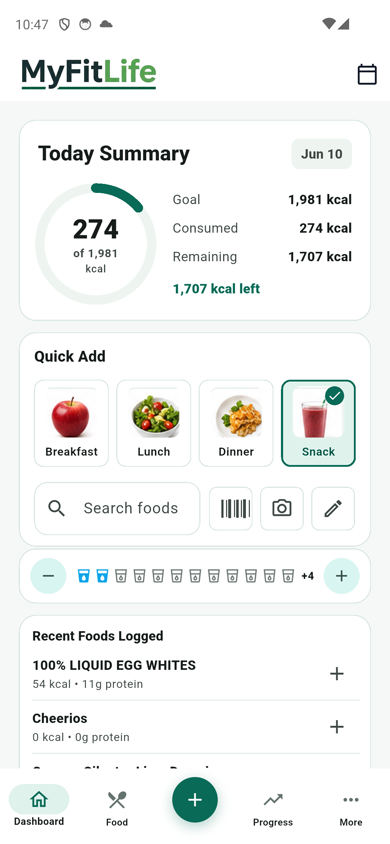
How accurate are AI food-photo calorie estimates, and when should you trust them? Treat a photo estimate as a fast, editable first draft—not a measured nutritional fact. It can be useful when the alternative is forgetting the meal or logging nothing, especially for simple, visible foods. Trust it less when portion depth is unclear, ingredients are hidden, cooking fat or sauce is invisible, or precise intake matters for medical care or performance. Always review the displayed food name, serving estimate, calories, and macros before saving, and switch to a barcode, verified database entry, recipe, package label, scale, or manual entry when stronger evidence is available.
This distinction is timely. Preliminary research announced for NUTRITION 2026 evaluated standardized photographs of 102 prepared meals across four photo-based calorie-tracking apps. According to the American Society for Nutrition release, the apps underestimated meal energy by roughly 250 to 345 calories on average and fat by about 30 grams. Those findings had not yet completed peer-reviewed journal publication at the time of this article, so they should be described as a conference result, not settled evidence. They are still consistent with a broader technical problem documented in peer-reviewed reviews and validation studies: recognizing a food is easier than inferring exactly how much of every ingredient is present.
What an AI food photo can—and cannot—observe
A photo contains color, shape, texture, visible boundaries, perspective, and surrounding objects that may provide scale. From those signals, a model can propose food identities and estimate portions. It cannot directly weigh the plate, inspect the recipe, know how much oil stayed in the pan, see sugar dissolved in a drink, or distinguish every visually similar ingredient. A glossy surface might be water, oil, butter, or sauce. A pale puree might be potatoes, cauliflower, beans, or a mixture. Two bowls that look similar can have very different depth.
After recognition, the system still needs nutrition data. The estimate must connect a detected item and assumed quantity to a food-composition record. That record may represent a generic food, a branded product, a restaurant item, or a recipe average. Even a correct visual label such as chicken curry does not identify the exact cut, cooking method, coconut milk, oil, sugar, sodium, or serving weight. The output is therefore a chain of estimates rather than one prediction.
The five-stage food-photo error model
A useful way to evaluate an AI food log is to ask where uncertainty entered. Five stages determine whether the final calorie and macro estimate is close enough for the decision you need to make.
- Recognition: Did the model identify every visible food and beverage correctly, including toppings, sides, and condiments?
- Portion inference: Did it estimate length, width, depth, density, and the amount actually eaten rather than only the area visible from above?
- Preparation: Did the estimate include batter, breading, oils, butter, marinades, sauces, sweeteners, and cooking changes that the camera cannot fully see?
- Database matching: Does the selected nutrition record represent the actual product or recipe, and are the units and serving definitions comparable?
- User correction: Did a person review the displayed name, serving, calories, and macros, then log omitted components separately or choose another method before saving?
Errors can compound. If the system identifies salmon correctly but underestimates its size, misses the oil, and matches it to a leaner preparation, the final number may be substantially low even though the food name looks right. Conversely, an imperfect food label can sometimes produce a similar calorie estimate by coincidence. A close total does not prove that the underlying protein, carbohydrate, fat, or micronutrient estimates are correct.
What peer-reviewed research says about accuracy
Systematic reviews show genuine progress alongside high variability. A review of 52 AI image-assessment studies reported a wide range of relative errors for calorie and volume estimates and found that studies used different image sets, ground-truth methods, and reporting standards. That heterogeneity prevented a single pooled accuracy figure. Simpler, single-food images generally produced lower errors than complex meals, which matches the basic visibility problem.
A 2025 systematic review of AI-based dietary assessment included 13 studies and found encouraging correlations for energy and macronutrients in several, but most studies were conducted in preclinical settings and many had moderate risk of bias. Correlation is also easy to overinterpret: a tool can rank a large meal above a small meal while still being meaningfully wrong about both absolute values. For daily calorie tracking, absolute error and systematic bias matter as much as correlation.
Controlled evaluations of multimodal language models sharpen the warning. One study using 52 standardized food photographs found systematic underestimation that increased with portion size; two models had mean absolute percentage error near 36% for energy estimates. Another evaluation using 114 meal photographs found strong food-identification performance but poor agreement for many nutrients, particularly as meal size increased. These are evaluations of specific models and conditions, not a score for every photo-logging feature, but they explain why review and correction remain essential.
Why portion size is the hardest part
Calories are derived from amount, not appearance alone. A top-down photo loses depth. A side photo can lose boundaries between foods. Plates, bowls, camera lenses, and shooting distance change apparent scale. Dense foods also contain more energy per visible volume than water-rich foods, so a modest volume error in nuts, cheese, oil, dressing, or dessert can matter more than a similar volume error in leafy vegetables.
Mixed dishes increase uncertainty because a visible serving contains an unknown recipe ratio. A lasagna slice could contain different amounts of pasta, meat, cheese, sauce, and oil. A smoothie hides nearly all ingredient boundaries. Restaurant recipes can change by location or cook. Even when an object such as a fork provides scale, it does not reveal density or internal composition.
An accuracy ladder for choosing the logging method
The best method depends on the available evidence and how costly an error would be. This is an accuracy ladder, not a claim that the top rung is perfect. Food labels have tolerances, recipes vary, database records can be incomplete, and scales do not resolve unknown ingredients. The point is to use the strongest practical evidence for the situation.
- Measured recipe or weighed ingredients: strongest practical option for a homemade dish when accurate composition and portions matter.
- Current product label or reliable restaurant nutrition: useful for a specific packaged or standardized item; confirm serving size and amount consumed.
- Barcode linked to the correct product: fast and specific, but compare the database entry with the current package because formulations and serving sizes change.
- Verified food search or saved recipe: useful for common foods and repeat meals when the selected record and portion unit are appropriate.
- Photo estimate reviewed by the user: efficient for visible meals, with a better record created by correcting the displayed name, quantity, calories, and macros and logging omitted components separately.
- Unreviewed photo estimate: acceptable as a rough memory aid when precision is not important, but too weak to treat as exact intake.
When a photo estimate is useful
Photo logging is strongest when it reduces enough friction to preserve the habit. It can capture an unplanned meal, create a draft while the details are fresh, or identify the likely components of a plate that would otherwise be omitted. It is also useful for pattern questions that tolerate uncertainty: whether vegetables appeared at lunch, whether restaurant meals are frequent, or whether portions seem to be trending larger over time.
- Use good lighting and include the whole plate, drink, and relevant sides.
- Separate overlapping foods when practical so boundaries are visible.
- Include a familiar object or known plate size for scale, while recognizing that depth remains uncertain.
- Review the estimated food name, serving, calories, and macros as one linked estimate rather than assuming it is an ingredient breakdown.
- Correct amounts and add oils, sauces, dressings, sweeteners, toppings, and beverages.
- Save a corrected repeat meal so future logging can use a stronger reference than a new estimate.
When not to rely on the photo alone
Do not rely on an unreviewed photo estimate when a decision requires tight numerical accuracy. That includes insulin or medication decisions, renal or cardiac nutrition limits, treatment of an eating disorder, food-allergy safety, nutrition support during pregnancy, weight restoration, high-level sport fueling, or any clinician-prescribed intake. A consumer photo logger is not a clinical measurement system and should never be described as clinical grade.
Also switch methods for foods the camera cannot characterize well: smoothies, soups, stews, curries, casseroles, baked goods, heavily sauced dishes, buffet combinations, and meals where substantial ingredients are hidden. Use the recipe, package, restaurant information, or manual entry. If that information does not exist, document a reasonable estimate and keep its uncertainty visible rather than manufacturing precision with extra decimal places.
How to audit the estimate before saving
- Name every component you can see and add every important component you remember but cannot see.
- Check whether the portion unit makes sense: grams, ounces, cups, pieces, or package servings.
- Compare high-energy ingredients—oil, nuts, cheese, creamy sauces, dressings, and sweets—with what was actually used.
- Confirm that the database match describes the same cooking method and product type.
- Review calories and macros for internal plausibility without assuming a plausible total is correct.
- Choose another logging method if the uncertainty is larger than the decision can tolerate.
The MyFitLife answer
MyFitLife treats AI photo analysis as the beginning of a food log, not the final authority. Use the photo to create one aggregate draft, then review or edit its food name, quantity, calories, and macros before saving. If an important component is missing, log it as a separate food or switch to barcode scanning, food search, a saved meal or recipe, or manual entry. Then interpret the meal with calories, macros, available nutrition details, MyFit Score, and progress context rather than trusting one generated number.
The right standard is decision fitness: is the estimate reliable enough for this specific purpose? For general wellness and habit awareness, a reviewed photo can be a practical tool. For medical nutrition therapy or any situation where an error could cause harm, it is not enough. MyFitLife does not diagnose conditions, calculate medication, or replace a registered dietitian or clinician. If precise intake affects your treatment or safety, follow the measurement and logging method your healthcare team recommends.
Sources and further reading
- Photo-based calorie-tracking apps may underestimate energy in meals American Society for Nutrition via ScienceDaily
- Validity and accuracy of artificial intelligence-based dietary intake assessment methods: a systematic review British Journal of Nutrition via PubMed
- AI-based digital image dietary assessment methods compared to humans and ground truth: a systematic review Annals of Medicine via PubMed
- Performance Evaluation of 3 Large Language Models for Nutritional Content Estimation from Food Images Current Developments in Nutrition via PubMed
- An Evaluation of ChatGPT for Nutrient Content Estimation from Meal Photographs Nutrients via PubMed
- FoodData Central U.S. Department of Agriculture
- How to Understand and Use the Nutrition Facts Label U.S. Food and Drug Administration
- Serving Size on the Nutrition Facts Label U.S. Food and Drug Administration
- Artificial Intelligence Risk Management Framework (AI RMF 1.0) National Institute of Standards and Technology
- MyFitLife Health Disclaimer MyFitLife
Related articles
- Can an AI Nutrition Coach Guide You to the Right App Screen Without Changing Your Data?
- Can Families Share a Nutrition App Without Sharing Food Logs?
- Can AI Personalize Nutrition Without Overpromising?
Install free. Keep the core tracker free.
Log food, scan barcodes, track macros, and review progress without starting a subscription.